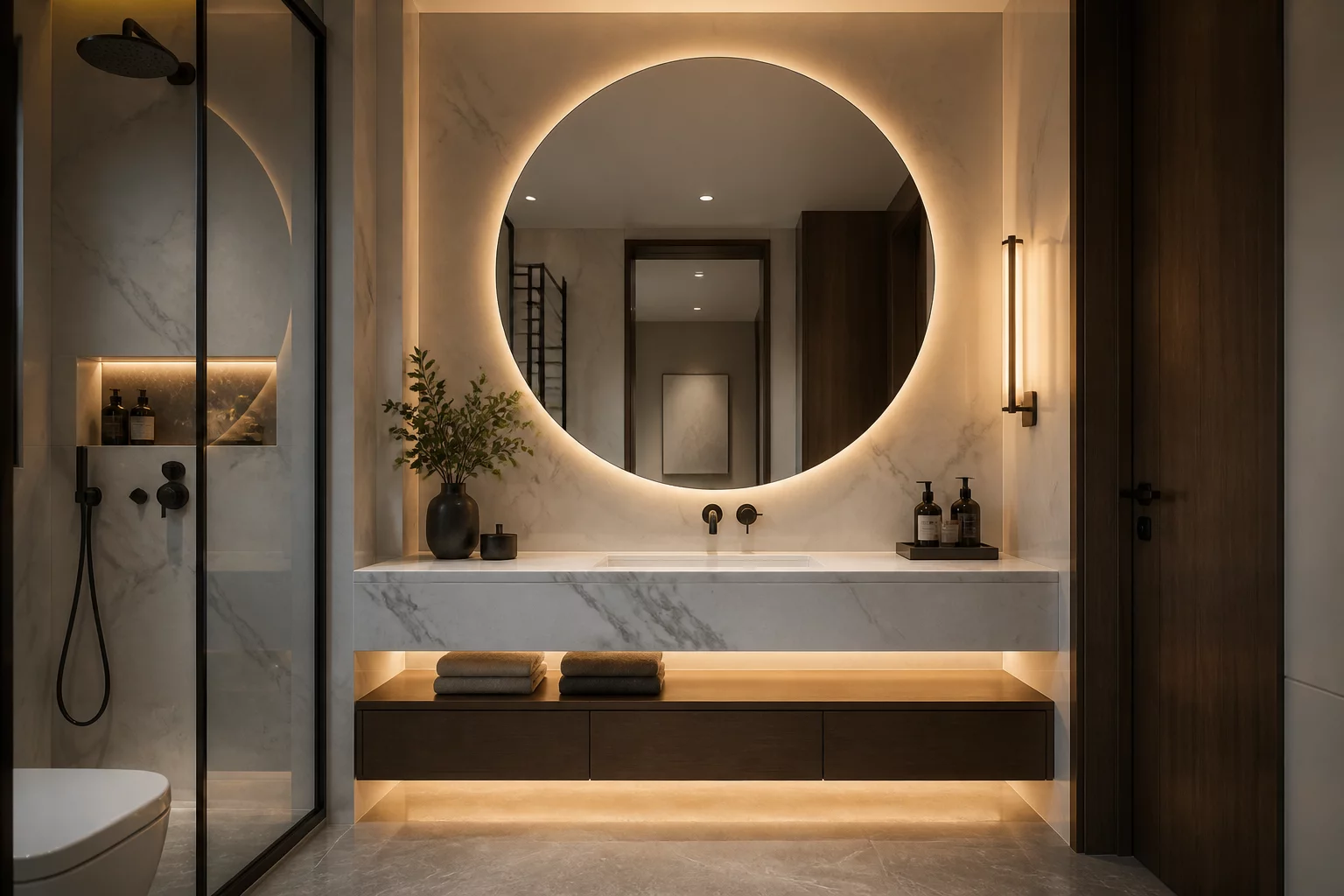
Bathroom design in 2026 has decisively transitioned from purely utilitarian functionality toward restorative home wellness. In this evolving space, the vanity mirror acts as both an expressive sculptural centerpiece and a high-performance atmospheric lighting tool. Homeowners and interior architects now prioritize bespoke silhouette flow, subtle edge reflections, and intuitive temperature controls that adapt smoothly from crisp morning routines to relaxed evening wind-downs.
Refining Spatial Perspective & Ambient Illumination
Strategic mirror orientation remains one of the most transformative decisions in high-end interior architecture. By harmonizing proportional geometry with natural daylight axes, reflective surfaces elevate room depth, magnify soft morning rays, and construct an aura of composed elegance throughout residential living zones.
Key Principles for Architectural Mirror Selection
- Opt for distortion-free, high-grade copper-free glass to preserve authentic light clarity.
- Match frame finishes to primary tactile accents such as muted brass, brushed nickel, or organic timber.
- Position mirrors perpendicular to major light apertures to amplify ambient luminance without harsh glare.
- Maintain balanced vertical clearance from floor baseboards to establish grounded aesthetic proportions.
"A well-placed mirror is not merely an accessory; it is an architectural portal that brings dynamic atmospheric shifts and radiant daylight into the core of your home."
— Trips Mirrors Design StudioCare and Material Longevity
Maintaining the pure luminosity of silver-backed glass requires gentle care practices. Avoid harsh ammonia-based solvents that can penetrate perimeter seals, and always clean using microfiber textiles dampened with purified warm water.